Materials & wear
Glass-filled and flame-retardant grades are hard on a screw. Choose the right material at the start and you’ll buy fewer screws.
Base steel
A standard TWS screw starts as EN41B (905M39) nitriding steel and is nitrided for over 80 hours.
Tougher options
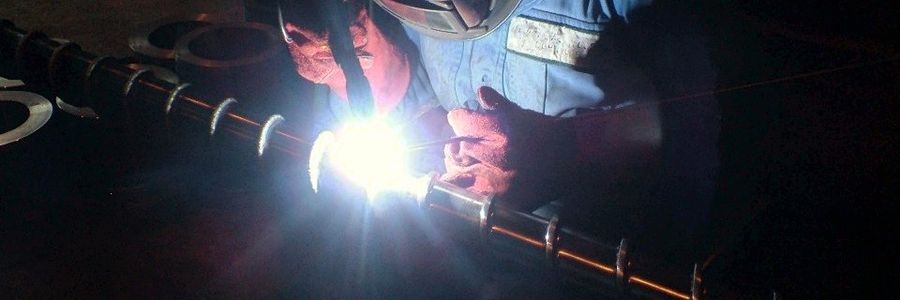
For abrasive or filled materials, we weld Stellite or Colmonoy onto the flight tips, which gives a bimetallic screw. If you need corrosion resistance, Hastelloy screws are rebuilt in C276. Hard chrome, Armoloy and tungsten carbide coatings are also available, on new screws or at refurb.
On the moulding floor
Measuring wear
You can’t measure wear with the screw in the machine. The screw has to come out of the barrel and cool down, and the barrel has to be cold and clean. Once that’s done, we measure the screw, the check ring and the bore, either on your site or here, and you get a written report.
Get in touch
Mon–Thu 07:30–16:15 · Fri 07:30–15:00
Want a worn screw checked? Call the workshop or send an enquiry through tws-ltd.com.
Call +44 (0) 1706 655402 Send an enquiry